PU vs TPR Soles: Which One Should Your Brand Choose?
SHARE
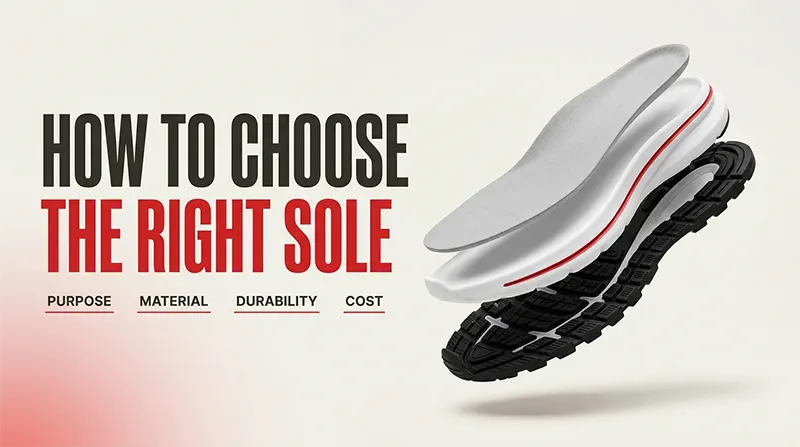
Choosing the right sole is one of the most important decisions for any footwear brand. The sole decides how a shoe feels, how long it lasts and how well it sells. Two of the most popular materials are Polyurethane (PU) and Thermoplastic Rubber (TPR).
What Are PU Soles?
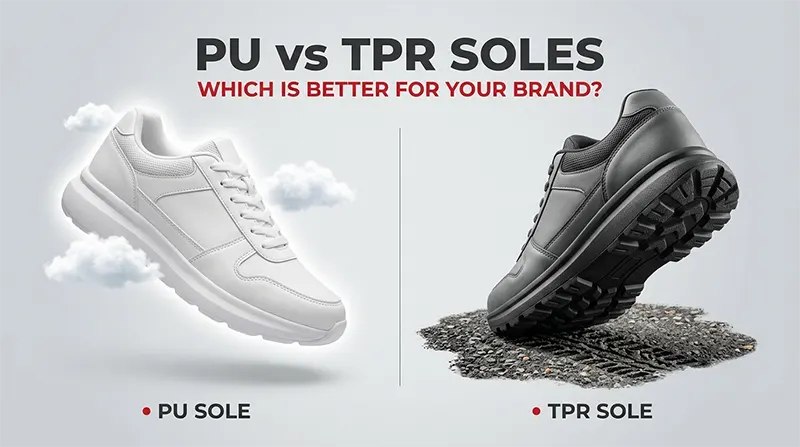
PU soles are made by pouring liquid polyurethane into a mold, where it cures into a light and flexible sole.
Key Benefits of PU Soles
- Lightweight and highly comfortable
- Excellent cushioning and shock absorption
- Good resistance to abrasion and wear
- Suitable for casual, formal and sports footwear
What Are TPR Soles?
TPR combines the flexibility of rubber with the easy processing of plastic. It is melted and injected into molds, which allows detailed patterns and a wide range of colors.
Key Benefits of TPR Soles
- Strong grip on different surfaces
- Budget-friendly for bulk production
- Stylish textures and finishes
- Easy to recycle during manufacturing
PU vs TPR: Quick Comparison
PU wins on comfort, weight and long-term durability. TPR wins on price, grip and design variety. PU is usually preferred for premium and all-day wear shoes, while TPR suits school shoes, sandals and value-priced collections.
Which One Should You Choose?
Think about your target customer, price point and product type. If comfort is the selling point, go with PU. If you need affordable, slip-resistant soles in high volume, TPR is the smarter pick. Many brands use both across different ranges.
Not sure which fits your collection? Talk to our sole experts and we’ll help you decide based on your product, budget and market.
- Blog (3)